Ocean conservation messaging usually reaches for the loudest possible image - a turtle tangled in plastic, a bleached reef, a beach littered with waste. For VIS, addressing an audience of children rather than adults, that shock register felt like the wrong instrument. The idea instead was to make the ocean's presence in a child's life quieter, and closer, than any headline could.
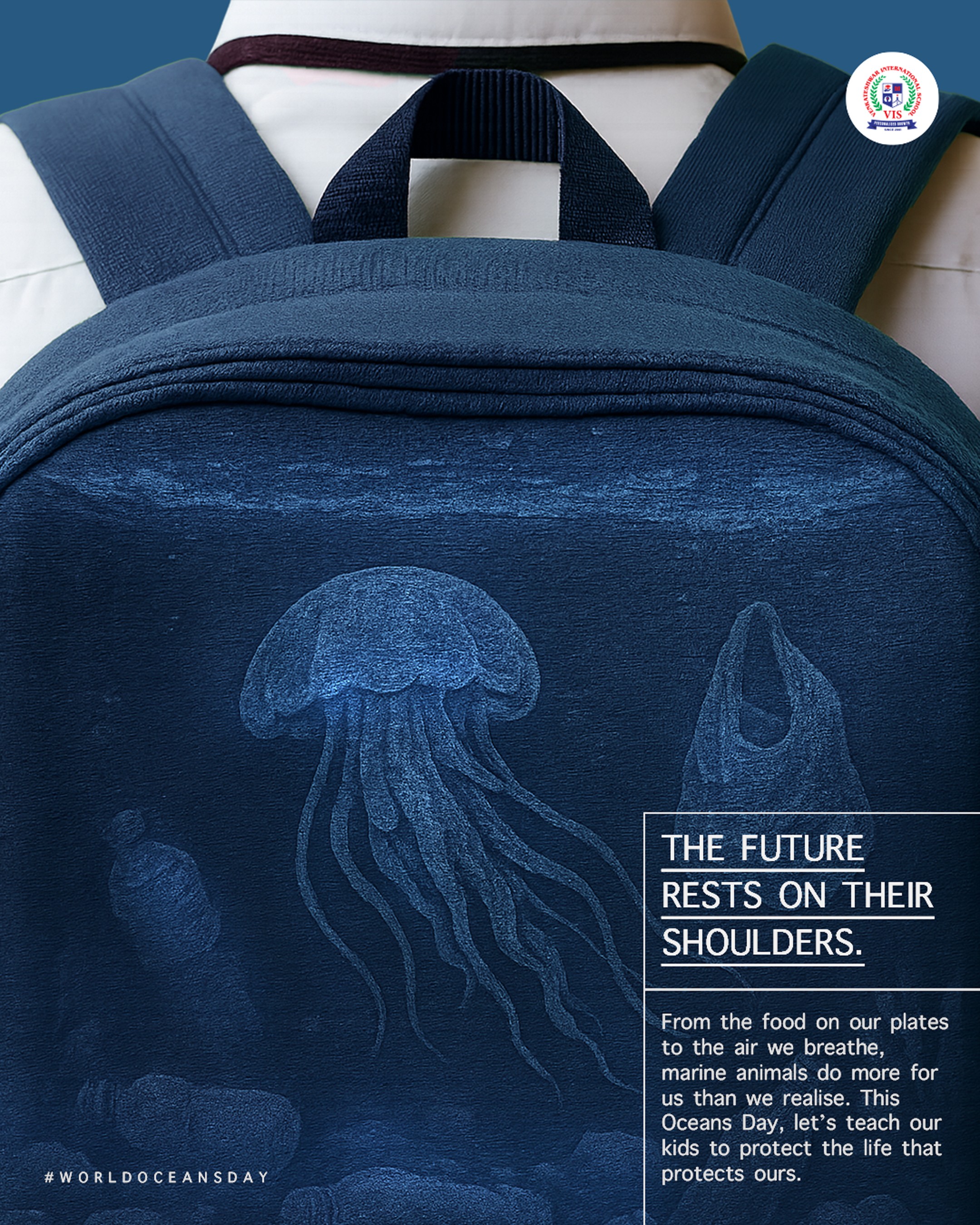
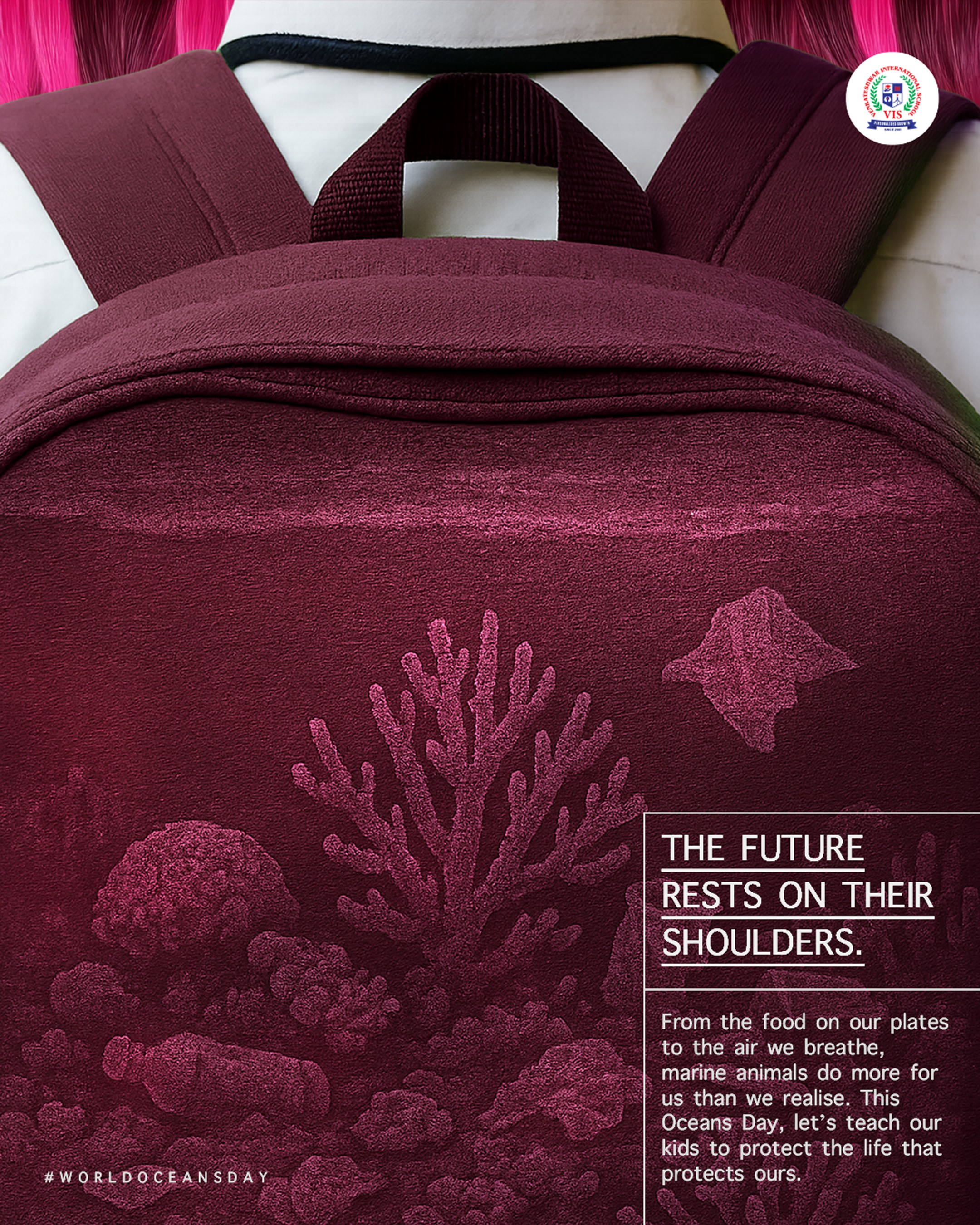
The series hides marine life inside the most ordinary object a student owns: their own school backpack. Look at each bag and, at first, there's nothing there - just fabric in a single colour. Only on a second look does a turtle, a jellyfish and fish, or a stretch of coral and a ray emerge, printed so close in tone to the bag itself that they're almost invisible unless you're looking for them. That near-invisibility is the entire argument: marine life quietly sustains the food on our plates and the air we breathe without ever asking to be noticed, and the visual asks the viewer to do exactly what the copy asks - look closer, or miss it entirely.
The art direction stays deliberately restrained to let that discovery happen. Each shot is cropped tight on the back of a backpack against a crisp white uniform, the child's face never shown, so every bag stands in for any child, not one in particular. Three colourways - grass green, deep navy, wine maroon - each conceal a different creature or scene, turning the set into a small, collectible series rather than a single image. The headline does the rest of the work in one line: The future rests on their shoulders. - true of the backpack physically, and true of the responsibility being asked of the generation wearing it.
The future rests on their shoulders.
Look closely. It always has.
Category:
Education
Client:
VIS Schools
Type:
Topical Awareness
Location:
India